Essence of the Bhagavad Gita: The Key to Happiness, Peace, and Success in Modern Life
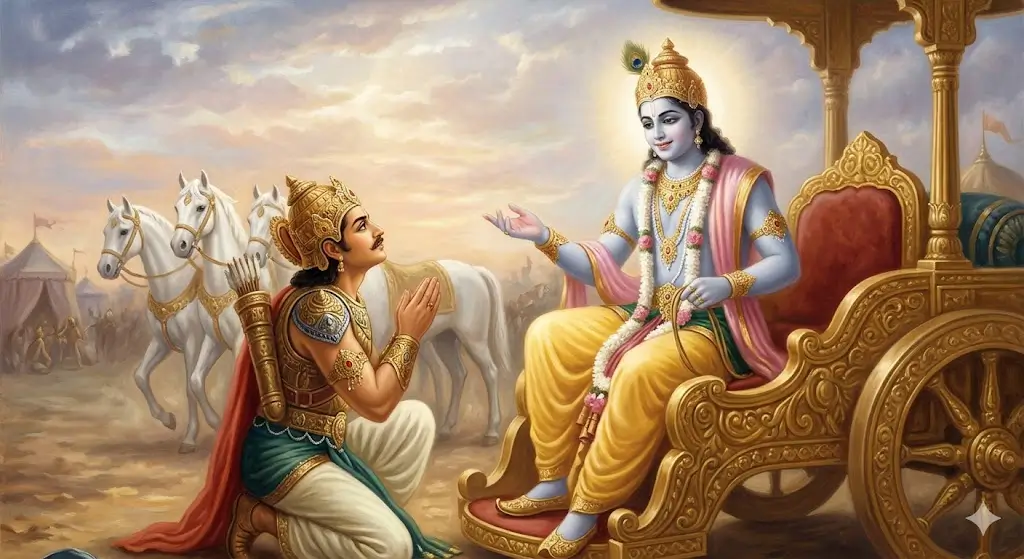
The Bhagavad Gita is not just an ancient religious text, but a psychological guide to life. This sermon, delivered by Lord Krishna to Arjuna on the battlefield of Kurukshetra, is a powerful tool for dealing with today’s hectic life, stress, and mental conflict. If we deeply understand the principles of the Gita, it not only gives us spiritual peace but also leads us to the pinnacle of material success.
1. Karma Yoga: Freedom from Worry about Results and Concentration
Krishna says, “Karmanye Vadhikaraste Ma Phaleshu Kadachana.” This means that a person has the right only to perform his actions, not to their results.
Focus on the Process: When we think too much about the results (such as exam results or promotions), we lose sight of the present.
Reduce Stress: Practicing selfless action eliminates worries about the future, thereby reducing mental stress.
Consistency: The Gita teaches us not to deviate from our path of duty even when faced with obstacles.
2. Control of the Senses and Mind: The Greatest Victory Over Oneself
According to the Gita, one whose mind is not under one’s control acts like an enemy to one.
Practice and Dispassion: A restless mind can only be controlled through constant practice and by giving up attachment to worldly pleasures.
Decision-Making Ability: Only a calm and controlled mind can make the right decisions in difficult situations.
Renouncing Cravings: Desires never end. Understanding the difference between ‘need’ and ‘greed’ is essential for a happy life.
3. Sthithaprajna: A state of equanimity in happiness and sorrow
Happiness and sorrow come and go in life like sunshine and shadow. The Gita inspires us to become ‘Sthithaprajna’, meaning one who remains steadfast in every situation.
The Power of Patience: True maturity lies in not being arrogant in success and not being disheartened by failure.
Embrace Change: The law of the world is change. What is yours today belonged to someone else yesterday and will belong to someone else the day after tomorrow. Accepting this truth reduces suffering.
4. Anger, Greed, and Attachment: Three Gates to Hell
Lobha Krishna warns Arjuna that anger destroys intelligence.
The ill effects of anger: When a person becomes angry, his power of reason (conscience) is destroyed, paving the way for his own destruction.
The Fall of Ego: The feeling of “I am superior” leads to downfall. The Gita teaches that we are merely instruments; everything happens according to the law of the Supreme Being.
5. Immortality of the Soul: Cultivating Fearlessness
The fear of death prevents a person from living fearlessly. The Gita’s teaching that “the soul is neither born nor dies” gives us courage.
The body is merely a garment: Just as we change old clothes for new ones, the soul too changes bodies.
Eternal Truth: This knowledge instills courage in man and he never hesitates to fight for Dharma (the right path).
6. Complete Surrender to God and Positivity
The Gita’s most positive message is—”Whatever happened was for the good; whatever is happening is for the good; whatever will happen will also be for the good.”
The Power of Faith: When we surrender everything to God, the fear of defeat vanishes from within us.
Living in the Present: The message of the Gita is to live in the present with complete devotion, leaving aside unnecessary worries about the future and regrets about the past.
Conclusion
The essence of the Bhagavad Gita is not to run away from struggle, but to face it boldly. It teaches us that whether the battle is fought on the battlefield or within our inner thoughts, victory always rests with truth, patience, and righteousness. If you desire lasting peace and success in your life, meditate on at least one verse from the Gita every day.